TH5220D1029 Installation Guide: A Comprehensive Plan
Welcome! This document provides detailed instructions for a smooth and efficient deployment of your TH5220D1029 system, ensuring optimal performance and reliability.

The TH5220D1029 is a high-performance, versatile system designed for demanding applications requiring robust data processing and reliable operation. This guide will walk you through the entire installation process, from initial unboxing to complete system configuration.
It’s engineered to deliver exceptional speed and efficiency, making it ideal for environments where uptime and data integrity are paramount. The TH5220D1029 boasts advanced features, including enhanced security protocols and remote management capabilities.
Before proceeding, please carefully review this document to understand the necessary steps and precautions. Proper installation is crucial for maximizing the system’s potential and ensuring long-term stability. This guide assumes a basic understanding of networking and server hardware. We aim to provide a clear, concise, and user-friendly experience throughout the setup process.
Safety Precautions
Important Safety Information: Prior to installing the TH5220D1029, carefully review these safety precautions to prevent injury and ensure proper operation. Always disconnect the power supply before handling internal components. Avoid working in damp environments, and ensure adequate ventilation to prevent overheating.
Warning: The TH5220D1029 contains components sensitive to electrostatic discharge (ESD). Use an ESD wrist strap and work on an ESD-safe surface. Do not attempt to disassemble components beyond what is described in this guide. Improper handling can cause damage and void the warranty.
Follow all local and national electrical codes. If you are unsure about any aspect of the installation, consult a qualified technician. Keep the work area clean and free of obstructions. This equipment is intended for indoor use only. Ignoring these precautions could result in serious injury or equipment failure.
General Safety Guidelines
Read First: Before commencing installation, thoroughly familiarize yourself with all instructions and safety warnings. Maintain a tidy and well-lit workspace, free from potential hazards. Ensure sufficient space around the TH5220D1029 for proper ventilation and access for maintenance.
Personal Protective Equipment (PPE): Consider wearing safety glasses to protect your eyes from debris. Avoid loose clothing or jewelry that could become entangled in the equipment. Always lift with your legs, not your back, when moving the TH5220D1029 or its components.
Operational Awareness: Be mindful of pinch points and sharp edges. Never operate the TH5220D1029 with missing or damaged parts. Report any malfunctions immediately. Keep this installation guide readily available for future reference. Adherence to these guidelines will contribute to a safe and successful installation process.

Electrical Safety Warnings
Critical: Disconnect power to the outlet before connecting or disconnecting any cables. Never work on electrical components with wet hands or while standing on a wet surface. Ensure the power outlet is properly grounded and meets the TH5220D1029’s power requirements.
Voltage Considerations: Verify the input voltage of the power supply matches your local power supply. Using an incorrect voltage can cause severe damage to the unit and pose a fire hazard. Do not overload circuits with multiple devices.
Cable Integrity: Inspect all power cables for damage before use. Replace any frayed or damaged cables immediately. Avoid running power cables near sources of interference or in high-traffic areas. If you are unsure about any electrical aspect of the installation, consult a qualified electrician. Ignoring these warnings could result in serious injury or equipment failure.
Unboxing and Component Verification
Carefully unpack the TH5220D1029 from its shipping container. Retain the original packaging for potential future transport or warranty claims. Once unpacked, thoroughly inspect all components against the Package Contents Checklist (see following section).
Verify the presence of the main TH5220D1029 unit, power cable, network cable, mounting hardware (if applicable), and any included documentation. Check for any visible signs of damage incurred during shipping, such as dents, scratches, or broken connectors.
Document any discrepancies or damage immediately and contact your supplier or the manufacturer. Do not attempt to operate a damaged unit. Proper component verification ensures you have everything needed for a successful installation and identifies potential issues before proceeding. A complete inventory is crucial for a smooth setup process.
Package Contents Checklist
Please verify that the following items are included in the TH5220D1029 package. If any items are missing or damaged, please contact your supplier immediately.
- 1x TH5220D1029 Main Unit
- 1x Power Cable (Region Specific)
- 1x RJ45 Network Cable (CAT5e or better)
- 1x Rackmount Kit (Optional, if purchased) – Includes rails and screws
- 1x Quick Installation Guide
- 1x Safety Information Booklet
- 1x Warranty Registration Card
- 2x Mounting Screws (for desktop installation)
Ensure all accessories are present and in good condition. The power cable should match your local power outlet standards. The network cable should be free of kinks or breaks. The rackmount kit, if included, should contain all necessary components for secure mounting. Retain this checklist for your records.
Inspecting for Damage
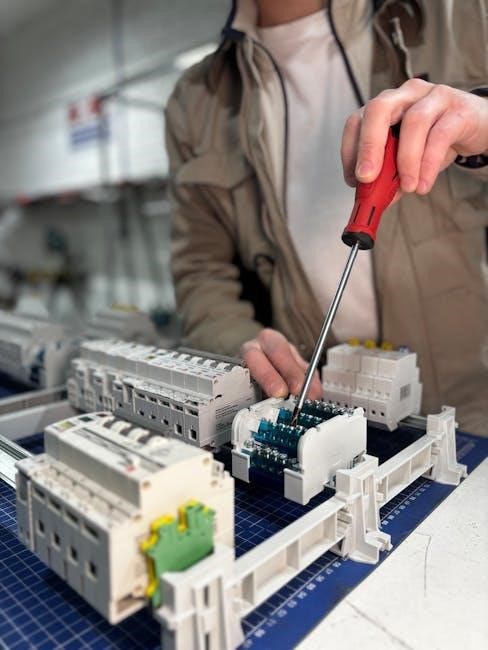
Carefully inspect the TH5220D1029 package and the unit itself upon arrival. Look for any visible signs of damage incurred during shipping. This includes dents, scratches, cracks, or any deformation of the chassis.
Pay close attention to the corners and edges of the unit, as these are the most vulnerable areas. Check the power cable and network cable for any cuts or fraying. If the rackmount kit is included, verify that the rails are not bent or broken.

If any damage is detected, do not attempt to power on or install the unit. Immediately document the damage with photographs and contact your supplier or the shipping carrier to file a claim. Retain all original packaging materials as evidence. Reporting damage promptly is crucial for a successful resolution.
System Requirements
Before proceeding with the TH5220D1029 installation, ensure your environment meets the necessary system requirements for optimal functionality. These requirements cover both hardware and software aspects to guarantee a seamless integration and stable operation.

Proper preparation will prevent potential compatibility issues and performance bottlenecks. Confirming these prerequisites upfront will save time and effort during the installation process. The TH5220D1029 is designed to integrate into existing infrastructure, but specific standards must be adhered to.
Meeting these requirements is essential for unlocking the full potential of the TH5220D1029 and ensuring long-term reliability. Detailed specifications for both hardware and software are outlined in the following sections, providing a clear understanding of the necessary components.
Hardware Requirements
The TH5220D1029 necessitates specific hardware configurations for optimal performance. A minimum of 8GB of RAM is required, with 16GB recommended for demanding workloads. Processing power should be at least an Intel Core i5 processor, or equivalent AMD Ryzen processor, ensuring sufficient computational capacity.
Storage demands include a minimum of 256GB SSD for the operating system and applications, with larger capacities advised for extensive data storage. The system supports SATA and NVMe SSDs. A dedicated Gigabit Ethernet port is essential for network connectivity, and a UPS (Uninterruptible Power Supply) is highly recommended for power stability.
Regarding the server itself, a standard 1U or 2U rackmount chassis is supported, alongside desktop form factors. Ensure adequate cooling is available within the server environment to prevent overheating. Compatibility with standard server hardware components is a key design feature.
Software Requirements
To successfully deploy the TH5220D1029, specific software prerequisites must be met. The system is officially supported on Windows Server 2019 and 2022, as well as leading Linux distributions like Ubuntu Server 20.04 and CentOS 7/8. A compatible virtualization platform, such as VMware ESXi or Hyper-V, is optional but recommended for flexible deployment.

Essential software components include the latest version of the .NET Framework (for Windows deployments) and appropriate Java Runtime Environment (JRE) for Linux. Database support encompasses MySQL, PostgreSQL, and Microsoft SQL Server. A web browser (Chrome, Firefox, Edge) is required for accessing the management interface.
Furthermore, ensure you have the necessary network drivers installed for your server’s network interface card (NIC). The installation package includes required software, but verifying compatibility with your existing environment is crucial for a seamless experience.
Physical Installation
Before commencing the physical installation of your TH5220D1029, ensure the designated server room meets environmental specifications – stable temperature and humidity are vital. Carefully position the unit, allowing adequate space for airflow and future maintenance access. Whether utilizing rackmount or desktop configuration, stability is paramount.
For rackmount installations, verify the rack is properly grounded and the shelf is capable of supporting the unit’s weight. Securely mount the TH5220D1029 using the provided rails and screws. Desktop deployments require a stable, level surface.

Crucially, do not power on the device before all cabling is complete. Proceed to connect the appropriate power supply, ensuring voltage compatibility. Double-check all physical connections before initiating the system startup sequence. Proper physical setup is foundational for reliable operation.
Mounting Options (Rackmount/Desktop)
The TH5220D1029 offers flexible deployment options to suit diverse environments. For rackmount installations, the unit is designed to fit standard 19-inch server racks, utilizing the included mounting rails. Ensure your rack is adequately grounded and possesses sufficient depth to accommodate the chassis. Secure the unit firmly with M6 screws, verifying proper alignment.
Alternatively, the TH5220D1029 can be deployed as a desktop unit. Place the system on a stable, level, and well-ventilated surface. Avoid obstructing the ventilation ports, as this can lead to overheating. Ensure sufficient clearance around the unit for easy access to ports and future maintenance.
Regardless of the chosen method, prioritize stability and airflow. Improper mounting can compromise performance and longevity. Refer to the dimensional diagrams for precise measurements and compatibility checks before proceeding.
Connecting Power Supply
Before connecting the power supply, verify that the voltage selector switch on the rear panel matches your local power source. Incorrect voltage settings can cause severe damage to the unit. The TH5220D1029 supports a wide range of input voltages, typically 100-240V AC, 50/60Hz.
Connect the provided power cord to the power inlet on the rear panel and then to a grounded electrical outlet. Ensure the outlet is easily accessible and meets all local electrical codes. Avoid using extension cords or power strips whenever possible; direct connection is recommended.
Once connected, the power supply’s LED indicator should illuminate. If it doesn’t, double-check the power cord connection and the voltage selector switch. Do not attempt to power on the unit if you suspect a power supply issue; contact technical support. Proper grounding is crucial for safety and optimal performance.
Network Configuration
Establishing network connectivity is vital for remote access and management of your TH5220D1029. This section details the necessary steps to configure the network settings. You can choose between a static IP address for consistent access or DHCP for automatic configuration.
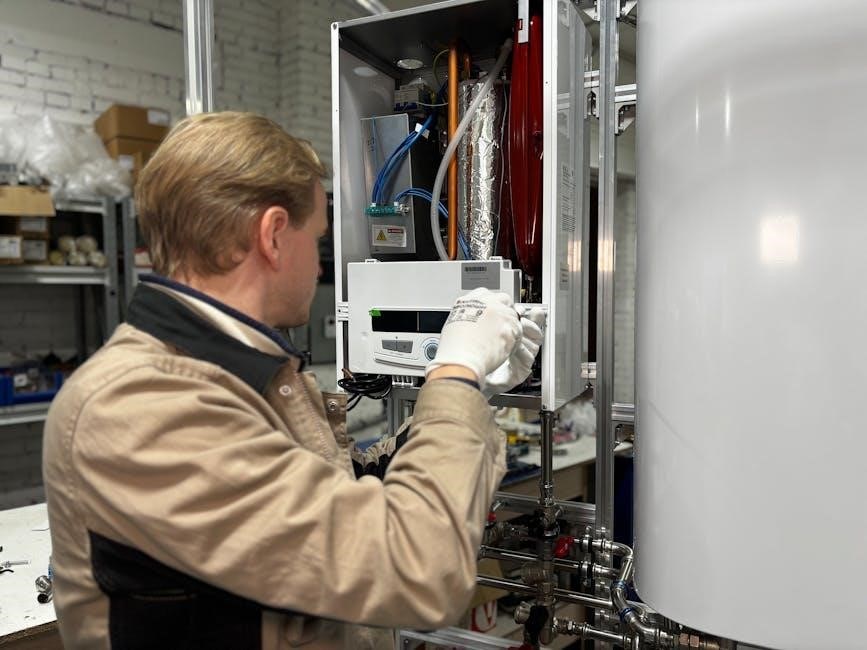
For Static IP assignment, you’ll need to know your network’s gateway address, subnet mask, and available IP address range. Access the TH5220D1029’s configuration interface (detailed in the Software Installation section) and manually enter these details.
If using DHCP, the TH5220D1029 will automatically obtain an IP address from your network’s DHCP server. Ensure your DHCP server is active and has available addresses. After configuration, verify connectivity by pinging the assigned IP address from another device on the network. A stable network connection is essential for optimal system operation.

IP Address Assignment (Static/DHCP)
The TH5220D1029 offers flexibility in IP address assignment, supporting both Static and DHCP configurations. Selecting the appropriate method depends on your network infrastructure and administrative preferences.
Static IP addresses provide a consistent and predictable address, ideal for remote access and server applications. You must manually configure the IP address, subnet mask, gateway, and DNS servers within the TH5220D1029’s network settings. Ensure the chosen IP address is outside the DHCP server’s allocation range to avoid conflicts.
DHCP (Dynamic Host Configuration Protocol) automatically assigns an IP address, simplifying network management. If your network has a DHCP server, the TH5220D1029 will request and receive an IP address upon connection. This is suitable for environments where IP addresses may change; To switch between modes, access the network settings via the web interface and select your preferred option.
Network Cable Connection
Establishing a stable network connection is crucial for the TH5220D1029’s functionality. Locate the RJ45 Ethernet port on the rear panel of the device. Use a standard Cat5e or Cat6 Ethernet cable to connect the TH5220D1029 to your network switch or router.
Ensure the cable is securely plugged into both the TH5220D1029 and the network device. A click sound usually indicates a proper connection. Verify the link lights on both the TH5220D1029’s port and the network device illuminate, signifying a physical connection has been established.
For optimal performance, avoid using damaged or excessively long cables. If you experience connectivity issues, try a different cable or port. Once physically connected, proceed to configure the IP address settings (static or DHCP) as described in the previous section to enable network communication.
Software Installation & Initial Setup
After the physical installation is complete, you’ll need to install the necessary software to manage and configure the TH5220D1029. This software provides a user-friendly interface for accessing the device’s features and settings.
The installation process is straightforward and guided by an intuitive wizard. Ensure your computer meets the minimum system requirements outlined in the ‘System Requirements’ section before proceeding. Close any unnecessary applications to free up system resources during installation.
Once installed, launch the software and follow the on-screen prompts. The wizard will guide you through the initial setup, including device discovery and basic configuration. Pay close attention to any prompts regarding firmware updates, as these often include critical bug fixes and performance improvements.
Downloading the Installation Software
To begin the software installation, you must first download the appropriate installation package from our official support website. Navigate to https://www.example.com/support/th5220d1029 (replace with the actual URL).
Locate the ‘Downloads’ section and select the software version compatible with your operating system (Windows, Linux, etc.). Ensure you download the complete installation package, not just individual components. The file will likely be a .zip or .exe file.
Before initiating the download, verify the file integrity by checking the provided checksum (MD5 or SHA256 hash). This ensures the downloaded file hasn’t been corrupted during transmission. Once downloaded, extract the contents of the archive to a convenient location on your computer.
Running the Installation Wizard
Once the installation files are extracted, navigate to the folder containing the ‘setup.exe’ or ‘install.sh’ (depending on your OS) file. Double-click this file to launch the installation wizard. You may be prompted by User Account Control (UAC) – grant the necessary permissions to proceed.
The wizard will guide you through a series of screens. Carefully read each prompt and accept the license agreement. Choose the installation directory; the default location is generally recommended. Select the components you wish to install – typically, a ‘Typical’ installation is sufficient for most users.
The installation process will then begin, copying files and configuring the system. This may take several minutes. Avoid interrupting the installation. Upon completion, the wizard will prompt you to restart your computer. Restarting is crucial for the software to function correctly.
Basic Configuration
After a successful installation and reboot, launch the TH5220D1029 application. You’ll be greeted with the initial configuration screen. This stage is vital for tailoring the system to your specific needs and security protocols.
First, establish administrative access by creating a primary user account. Choose a strong, unique password and securely store it. This account will have full control over the system. Next, configure the system date and time accurately; this is essential for logging and scheduling functions.
Consider enabling two-factor authentication for enhanced security. Explore the initial settings related to data storage and backup procedures. Familiarize yourself with the default configurations and adjust them as necessary to align with your organizational policies. Proper initial configuration significantly impacts long-term performance and security.
User Account Creation
To begin, navigate to the “User Management” section within the TH5220D1029 administration interface. Click “Add User” to initiate the account creation process. You will be prompted to enter essential details, including a unique username, a strong password (meeting complexity requirements), and the user’s full name.
Carefully define user roles and permissions. Assign appropriate access levels – administrator, operator, or read-only – based on the user’s responsibilities. Consider implementing group-based permissions for streamlined management. Ensure each user has a unique account and avoids sharing credentials.
Enable multi-factor authentication where possible for enhanced security. Document all created accounts and their associated permissions. Regularly review user access rights and revoke access for departing employees. Secure user account management is paramount for protecting sensitive data and system integrity.
Setting System Date and Time
Accurate system time is crucial for logging, scheduling, and data synchronization. Access the “System Settings” menu and locate the “Date & Time” configuration panel. You can choose to manually set the date and time or enable automatic synchronization with a Network Time Protocol (NTP) server;
We strongly recommend utilizing NTP synchronization for consistent and precise timekeeping. Select a reliable NTP server from the provided list or enter a custom server address. Verify the time zone is correctly configured to match your geographical location. Incorrect time settings can lead to operational errors and data inconsistencies.
After making changes, apply the settings and verify the updated date and time displayed on the system interface. Regularly monitor NTP synchronization status to ensure continued accuracy. Proper time configuration is fundamental for reliable system operation and accurate data analysis.
Troubleshooting Common Issues
If you encounter problems during or after installation, this section provides solutions to frequently reported issues. Connectivity problems? Verify network cable connections and IP address configuration. System unresponsive? Try a soft reboot via the system interface. If that fails, perform a hard reboot by disconnecting and reconnecting the power supply.
Software installation errors often stem from insufficient system resources or corrupted download files. Ensure your system meets the minimum requirements and re-download the installation package. Login failures? Double-check your username and password, and verify user account permissions.
For persistent issues, consult the detailed troubleshooting guide available on our support website or contact our technical support team. Provide detailed error messages and system logs to expedite the resolution process. Remember to check the FAQ section for quick answers to common questions.